

The break-even point is one of those essential concepts that can make the difference between a business barely surviving day to day and one that thrives. In the business world, making data-driven decision making is the key to success. That is why this article will guide you through what the break-even point is, how to calculate it, and most importantly, how it can help your business achieving the desired profitability.
What is the break-even point and why is it important?
The break-even point is the level at which a company’s revenue equals its costs total, that is, the exact moment when no profit or loss is generated. Upon reaching this point, the business has covered all fixed and variable costs, and any additional sales start generating profit.
This concept is vital because it allows entrepreneurs and managers to assess whether their business model is sustainable. Knowing what the break-even point is It is essential for setting appropriate prices, controlling costs, and projecting company growth.
From my point of view, there is no other way to commercially grow a business than to have a very clear understanding of the break-even point.
The financial break-even point: Its impact on profitability
The financial break-even point is a crucial metric for any business wanting to evaluate long-term profitability. By understanding this concept, companies can identify the sales volume needed to cover all costs. Imagine having a very clear picture of the total monthly sales volume needed to stay above the break-even point.
Knowing this information allows you to be more skilled when making important decisions about the direction of your business.
A careful analysis of break-even point allows businesses to make strategic decisions such as when is the right time to expand, how to reduce costs, or even if it’s necessary to adjust prices to stay competitive. Additionally, calculating this point helps you avoid losses and optimize financial decision-making, ensuring greater economic stability.
In LATAM, the biggest problem businesses face is that they have no idea what their break-even point is. For this reason, they cannot make clear decisions. Without knowing, some months they sell well above the break-even point, but other months they also sell far below it.
Key formulas to calculate the break-even point
Finding the break-even point is not complicated at all. However, it requires very organized accounting; otherwise, it can be a complex task. To make informed decisions, it’s important to understand the break-even formulasBelow, we present the two most common formulas you should know:
Break-even in units

Break-even in revenue

These formulas allow you to determine how many units you need to sell or what level of revenue is required to cover your total costs and start generating profit.
Practical examples to calculate the break-even point
To make the concept clearer, let’s use a practical example. Suppose you have a company that sells products for $100 each, with variable costs of $60 per unit and monthly fixed costs of $10,000. Applying the break-even in units. So we have:
Unit Price: $100
Variable Costs per Unit: $60
Monthly Fixed Costs: $10,000
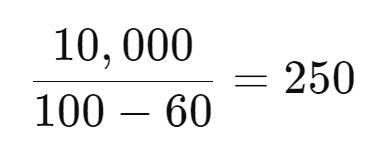
This means you need to sell at least 250 units per month to cover all your costs and start generating profit. In a similar example, you can calculate the financial break-even point using total sales and variable costs.
It’s important to emphasize that selling 250 units only keeps you at the break-even point. This means that if you really want to make a profit and grow your business, you need to find a way to sell well above 250 units without incurring additional costs. Or at least, not at the same rate you expect to scale your sales.
How to chart the break-even point: A step-by-step guide
A break-even chart can be an excellent visual tool to analyze a company’s financial performance. Here’s how to create a basic chart:
- On the X-axis, enter the number of units sold.
- On the Y-axis, plot the revenue and costs.
- Plot the revenue line, which should be linear (depending on sales).
- Draw the fixed cost line, which will be a horizontal line.
- Add variable costs to fixed costs to get the total cost line.
The point where the revenue and total cost lines intersect is the break-even chartFrom this point on, any additional sales will generate profit.
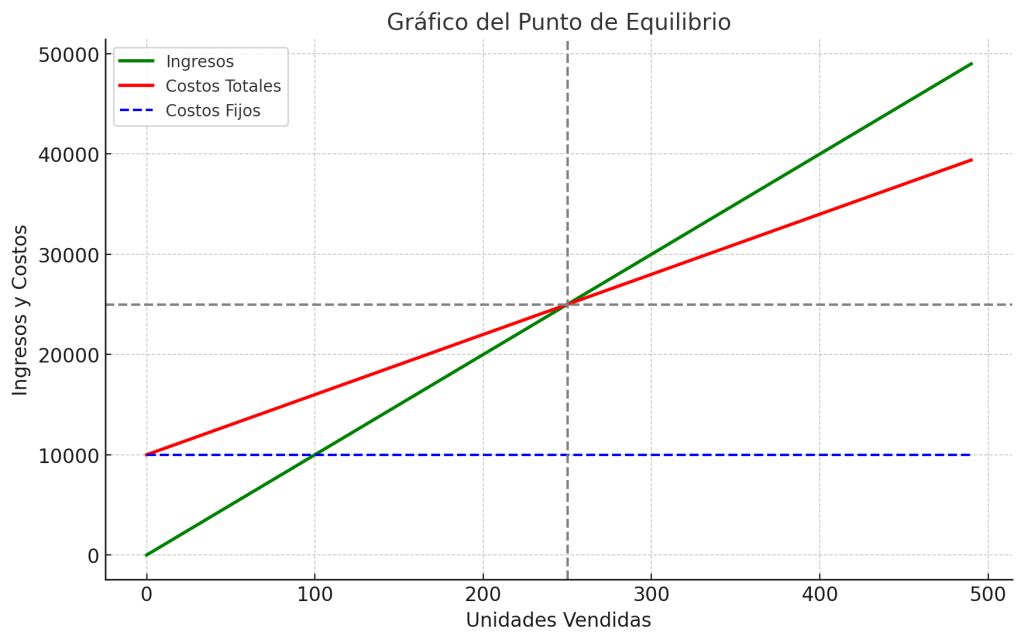
As you can see, when units sold exceed the break-even point, the green line (Revenue) is higher than the red line (Total Costs). This is exactly where you want to position yourself. The further to the right of the break-even point you are, the better it is for your business growth.
The break-even chart: Interpretation and analysis
Once you have your break-even chart, the next step is to interpret it. You’ll see that before reaching the break-even chart, the company incurs losses, as costs exceed revenue. However, after surpassing that point, sales start generating profits.
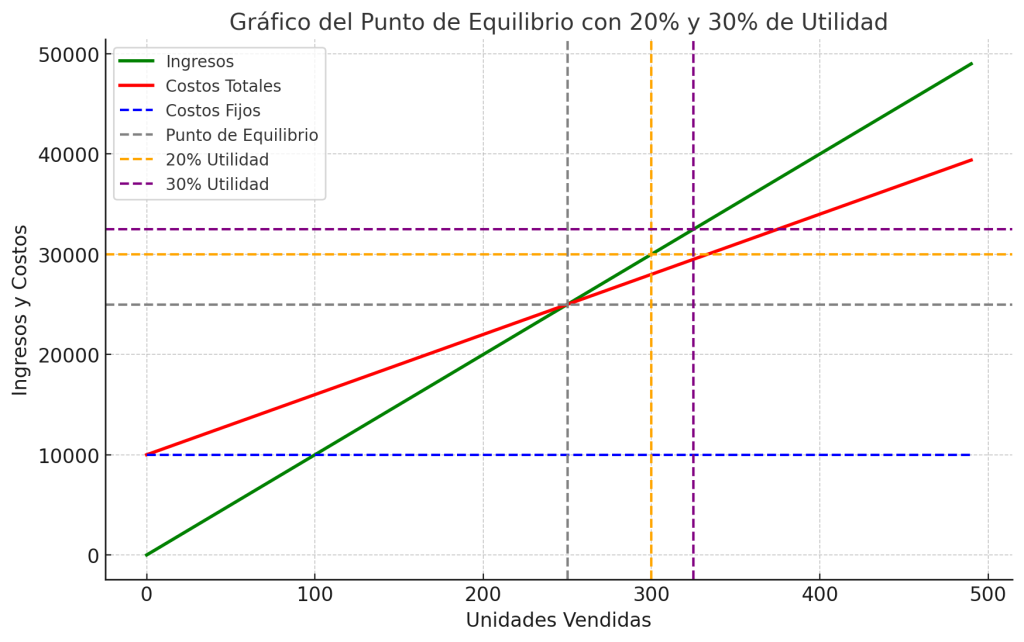
Analyzing this chart will allow you to identify how many units you need to sell to cover your costs, but it will also help you project how much you need to sell to reach a specific profit goal.
How calculating the break-even point can save your business
Calculating and understanding the break-even point can be a powerful tool to avoid losses. If a company isn’t aware of when it will reach profitability, it risks operating at a loss for extended periods. With an accurate calculation, you can identify the minimum sales volume needed to sustain the business and ensure its viability.
This type of analysis also lets you adjust your commercial strategy. For instance, if fixed costs are too high, you might consider restructuring to reduce expenses. If prices are too low to cover costs, it might be necessary to adjust your pricing strategy. All this helps improve profitability and prevent business failure.
The break-even point as the key to success
The break-even point is much more than just a financial metric: it’s a map that guides you toward profitability. Understanding what the break-even point is, calculating it correctly and analyzing its implications will allow you to make strategic decisions that guarantee your business’s sustainable growth. This analysis is not only useful for large businesses but is also vital for small and medium-sized enterprises seeking stability and success.
Set a clear growth strategy with CONEMSA!
If you want a deeper insight into your business and how to achieve break-even point quickly and effectively, don’t hesitate to contact our CONEMSA experts. We’ll help you develop a personalized strategy that boosts your company’s commercial growth!Click here and schedule a consultation with a specialized advisor today!